Professional Success and Memory: The Science Behind High Performance

Have you ever felt like you study, attend meetings, read reports… yet still can’t retain everything you need? This isn’t just a focus issue — it could mean your memory is overloaded or undertrained. In today’s world, where the ability to learn fast and adapt is crucial, being able to store, retain, and retrieve information effectively is no longer optional — it’s essential.
Research shows that professionals with strong working memory solve problems faster, make better decisions, and are more innovative. The good news? Memory can be improved. In this post, you’ll understand what science reveals about the process, why it’s connected to career success, and which simple, research-backed strategies can help you boost your information retention. Let’s get straight to it.
You will read about:
- 1. Is Poor Memory Sabotaging Your Career?
- 2. High Performance Requires More Than Effort — It Requires Strong Memory
- 3. The Psychology Behind Information Retention at Work
- 4. Turn Your Memory into a Professional Competitive Advantage
- 5. Memory Tests: The Science-Backed Technique That Supercharges Learning
Is Poor Memory Sabotaging Your Career?
Memory problems aren’t always obvious. They often show up as “lack of focus,” “procrastination,” or even “stress.” But the real issue could be a failure in your ability to store and retrieve information. Professionals who struggle to remember project details, client names, or steps in a process lose productivity and credibility — both internally and externally. And the damage can be silent but persistent.
Cognitive science shows that the brain needs specific strategies to consolidate new information. A study by Conway, Kane, and Engle (2003) found that working memory capacity is directly related to performance in complex tasks, such as critical reading and decision-making. Without a strong memory foundation, it’s hard to maintain high standards in the workplace. In other words: if you feel like you’re constantly starting over, it may be time to invest in your cognitive — not just technical — skills.
High Performance Requires More Than Effort — It Requires Strong Memory
Spending more time at your desk or signing up for endless courses doesn’t guarantee better performance. What truly sets high-performing professionals apart is their ability to access the right knowledge at the right time. This relies on a sharp memory — not just effort. Long-term retention turns information into strategic action, especially under pressure.
According to research by Roediger and Karpicke (2006), testing yourself significantly improves retention. In other words: those who practice active information recall, instead of simply reviewing content passively, retain more and apply knowledge more effectively. Think of the brain like a muscle — the more you train it to retrieve, the stronger the memory becomes. That’s why some people seem to remember everything effortlessly — they’re using the right method.
The Psychology Behind Information Retention at Work
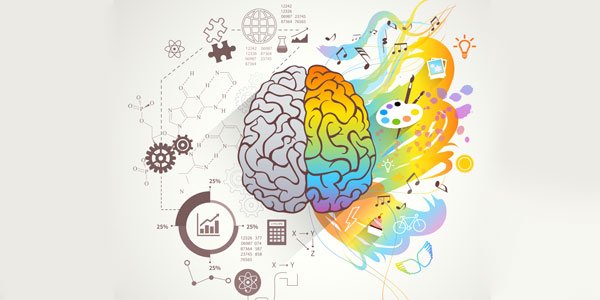
Understanding how the brain organizes and accesses information can completely transform how you learn, attend meetings, and manage tasks. Cognitive psychology shows that memory is split into different systems: short-term memory, working memory, and long-term memory. Each one requires different strategies. In the workplace, all of these layers operate simultaneously — which means when one fails, your overall performance drops.
According to Unsworth and Engle (2007), the ability to actively maintain information while handling another task separates top performers from those who get distracted or make repeated mistakes. This “working memory” is crucial for handling simultaneous demands — like remembering what a client just said while drafting an email or comparing numbers in a spreadsheet while brainstorming a solution. Fortunately, this skill can be developed — starting with understanding how you store and retrieve information.
Turn Your Memory into a Professional Competitive Advantage
A strong memory isn’t just a personal benefit — it’s a real competitive edge in the job market. Professionals who remember processes, connect ideas, and access knowledge quickly make better decisions, deliver more results, and earn more trust from peers and leaders. Memory becomes less of an automatic process and more of a strategic tool.
In the book Make It Stick (Brown, Roediger & McDaniel, 2014), the most effective learning strategies include spaced repetition, self-testing, and varied practice environments. When you apply these techniques to your daily routine, you turn learning into something long-lasting. This means that instead of forgetting what you learned in last week’s meeting, you remember it clearly — and apply it precisely. In a fast-paced, competitive market, that skill is gold.
Memory Tests: The Science-Backed Technique That Supercharges Learning
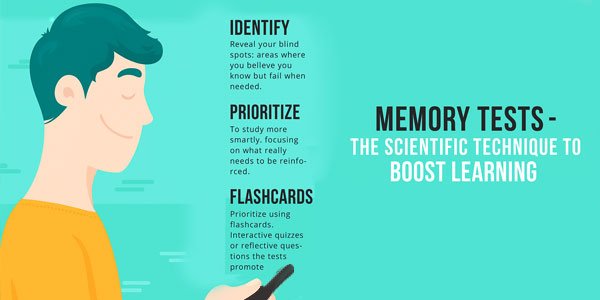
If you’re not using self-testing methods regularly, you’re missing out on one of the most effective tools for building strong memory. Contrary to popular belief, testing isn’t just for measuring knowledge — it reinforces it. The simple act of trying to recall something (without looking it up) activates areas of the brain responsible for consolidating memory. This is known as the “testing effect,” and it’s widely supported by science.
Additionally, well-designed memory tests reveal blind spots — areas you think you’ve mastered but actually forget when needed. This helps you study smarter by focusing on what really needs reinforcement. Whether using flashcards, quizzes, or reflective questions, testing leads to more active, intentional, and long-lasting learning. The best part? You can start using this technique today.

Improving your memory isn’t just about remembering where you put your keys. It’s about building a brain that can handle complex information with efficiency and precision. In a world that demands innovation, agility, and results, your ability to store, retain, and retrieve knowledge could be the difference between staying stuck or rising fast. And now, backed by science, you know where to start.
Want to know how strong your memory really is? Take our free test and see your results in just a few minutes. Discover your strengths and how to improve your retention.
💡 Take The Next Step
Evaluate your ability to store, retain, and retrieve information—essential skills for daily and professional performance.
This test is divided into three sections (Simple Storage and Manipulation, Retention and Complex Manipulation, Recovery with Interference).
👉 Take The Test Now — Assess your stress levels and learn how to reduce them.
References
- Conway, A. R. A., Kane, M. J., & Engle, R. W. (2003). Working memory capacity and its relation to general intelligence. Trends in Cognitive Sciences, 7(12), 547–552. https://doi.org/10.1016/j.tics.2003.10.005
- Roediger, H. L., & Karpicke, J. D. (2006). Test-enhanced learning: Taking memory tests improves long-term retention. Psychological Science, 17(3), 249–255. https://doi.org/10.1111/j.1467-9280.2006.01693.x
- Unsworth, N., & Engle, R. W. (2007). The nature of individual differences in working memory capacity: Active maintenance in primary memory and controlled search from secondary memory. Psychological Review, 114(1)
- Brown, P. C., Roediger, H. L., & McDaniel, M. A. (2014). Make It Stick: The Science of Successful Learning. Harvard University Press.
- Images: Freepik