Learn to Think Like Sherlock Holmes: Practical Logical Reasoning Techniques

In a world overloaded with information and distractions, making quick and effective decisions is more valuable than ever. But what if your brain is wired to take shortcuts that lead to poor outcomes?
Understanding how your mind processes information and applying techniques from masters of logic—like Sherlock Holmes—can give you an edge in problem-solving, from choosing your next career move to resolving conflicts at work.
You will read about:
- 1. What’s Blocking Your Logical Thinking?
- 2. Why Did Sherlock Holmes Think Better Than You?
- 3. Science Explains: Why We Make Poor Decisions Without Noticing
- 4. The Difference Between Fast and Slow Thinking
- 5. Logical Reasoning Techniques Used by Sherlock Holmes
- 6. How to Train Your Mind to Solve Problems Clearly
- 7. Are You Ready to Think More Clearly? Take the Test
What’s Blocking Your Logical Thinking?
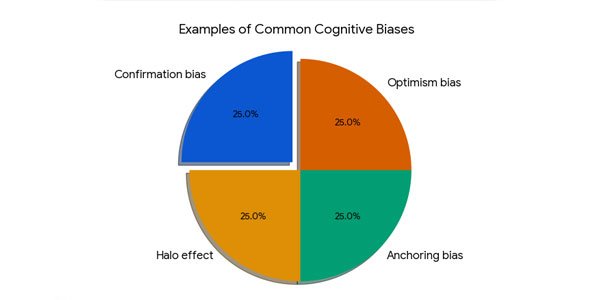
Most people assume they’re logical. But cognitive biases—mental shortcuts that help us make decisions faster—often lead us astray. Think about the confirmation bias: we tend to seek out evidence that supports what we already believe, ignoring facts that contradict our views. This impacts everything from financial decisions to personal relationships.
For example, imagine you’re hiring someone. You liked one candidate’s résumé immediately, and now every answer they give feels “better.” That’s not logic—it’s bias. By recognizing these blind spots, you start seeing the world more clearly.
Why Did Sherlock Holmes Think Better Than You?
Sherlock Holmes didn’t just “see” more than others. He trained his mind to observe details and question assumptions. While Watson relied on intuition, Holmes used a methodical process rooted in deductive reasoning.
You don’t need to solve crimes to think like him. Start by slowing down your judgments. Ask: “What do I know for sure?” and “What could I be missing?” Next time you’re in a heated discussion, instead of reacting emotionally, break the argument into facts and assumptions. Holmes’ brilliance wasn’t magic—it was practice.
Science Explains: Why We Make Poor Decisions Without Noticing
In Thinking, Fast and Slow, Daniel Kahneman reveals that our brain operates in two modes: System 1 (fast, emotional) and System 2 (slow, analytical). System 1 jumps to conclusions—it’s why you buy things you don’t need or respond impulsively to emails.
Studies show that logical reasoning is linked to stronger working memory and decision-making under pressure (Liu et al., 2025). But we don’t default to logic—we default to speed.
A real-world example: You get a last-minute project and immediately feel overwhelmed. Your brain says “this is impossible.” But with logical thinking, you pause, break the task into parts, and set priorities. The result? A calm, productive approach instead of panic.
The Difference Between Fast and Slow Thinking
Understanding the two speeds of thought can improve your decisions. Fast thinking is helpful when crossing the street or avoiding danger. But when analyzing data or having tough conversations, you need slow thinking.
Here’s a practical trick: Before making an important decision, write down your reasoning. This engages System 2 and reveals weak spots in your logic. Use a checklist like: “What’s the goal? What are the facts? What’s missing?”
Applying slow thinking at work helps avoid mistakes. Instead of replying to a confusing email in frustration, take a breath. Re-read it. Ask clarifying questions. Your response will be smarter—and more respected.
Logical Reasoning Techniques Used by Sherlock Holmes
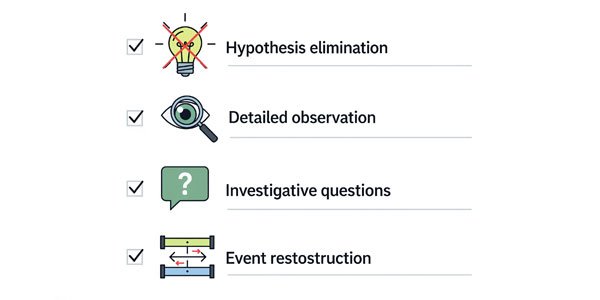
Holmes often used what’s known as deductive reasoning: starting from general truths and narrowing them down. But he also used abductive reasoning—forming the most likely explanation from incomplete data.
You can too. Next time something unexpected happens, try this:
-
Describe the situation objectively.
-
List possible causes without judgment.
-
Eliminate options that don’t fit the evidence.
This helps in everything from diagnosing a tech problem to understanding a team conflict. Holmes didn’t jump to conclusions—he ruled them out methodically.
How to Train Your Mind to Solve Problems Clearly
Like any muscle, your mind gets sharper with training. Start with daily mental exercises:
-
Play logic puzzles or chess.
-
Reflect on decisions and their outcomes.
-
Practice explaining your thought process aloud or in writing.
One study (Cavioni et al., 2020) showed that children improved math and logic skills significantly through structured logic games over 8 weeks. Adults benefit too.
In daily life, choose one problem to analyze with intention: How did I approach it? What worked? What didn’t? This habit develops clarity and confidence over time.
Are You Ready to Think More Clearly? Take the Test
Reading isn’t enough. You need to apply what you’ve learned—and discover where you stand today.
This quick Logical Reasoning Test gives you insight into how your brain works under pressure. Are you quick but sloppy? Or slow but accurate? The results help you target areas for growth.
Knowing your strengths is the first step to making smarter decisions, faster.

Logical reasoning isn’t just for detectives or scientists. It’s a daily skill that can improve your decisions, reduce stress, and make life easier. By thinking like Sherlock Holmes and applying scientific insights, you can unlock a more focused and empowered version of yourself.
Ready to test your reasoning skills?
👉 Take the Logical Reasoning Test Now – It’s Free
References
- Kahneman, D. (2011). Thinking, Fast and Slow. Farrar, Straus and Giroux.
- Konnikova, M. (2013). Mastermind: How to Think Like Sherlock Holmes.
- Liu, H., Fu, Z., Ding, M., Ning, R., Zhang, C., Liu, X., & Zhang, Y. (2025). Logical reasoning in large language models: A survey and theoretical foundations.
- Cavioni, V., Grazzani, S., et al. (2020). Improving children’s logical reasoning and mathematical performance via a digital game: An 8‑week intervention.
- Images: Freepik